The Company That Owns The World Now Wants to Own The Final Bastion of Decentralization
Blackrock aiming at the Digital Currency Crown
Introduction:
Since the start of 2023 Blackrock’s CEO has been having a much more positive outlook on crypto overall compared to what he and his financial colleagues over at JPMorgan Chase were saying back in 2017 (Back in those days when crypto was still growing they called people who own bitcoin – “stupid”) . Larry Fink has gone completely backwards on his previous statements about bitcoin being an “index of money laundering”. Not only that but he is now preaching that he is a “firm believer” in crypto. His firm manages the largest bitcoin ETF as of writing this.
The iShares Bitcoin ETF performance The Overall Crypto Market Impact on the retail investors
Increased interest in Digital Assets The Government’s involvement in crypto
Will other Crypto ETFs show up? Talks about a potential Ripple ($XRP) ETF The Rise of Meme Coins
What’s the End-Game for Blackrock?
Can outflows destroy iBit? What’s the future of Blackrock’s digital currency ETFs and Final Thoughts
How it all started?
Blackrock's history in a nutshell
Founded in 1988 by Larry Fink, Robert S. Kapito, Susan Wagner, and several other less known partners. BlackRock started out as a risk management and fixed income institutional asset management fund. Over the years the company grew at a rapid pace, becoming a key player in the financial world through a series of takeovers, including the purchase of Merril Lynch Investment Managers in 2006 and Barclays Global Investors in 2009, which brought with it the inception of the iShares ETF Business model under its umbrella. BlackRock’s Aladdin risk management platform has been at the forefront of it’s success. By 2023 (before they started liking crypto) the firm managed over $10 TRILLION in assets, making it the world’s largest asset manager. In other words the company has slowly been dabbling into owning more and more shares of every single industry that you can think of. Not only that but BlackRock saw a huge gap in the property market in the U.S. leading to its biggest acquisition yet after the 2020 COVID-19 Pandemic.
In November 2021, BlackRock pulled a part of it’s investments out of their Indian Fund and moved them into China.
On December 28, 2022 BlackRock received the full rights to reconstruct Ukraine after the war.
In June 2023, BlackRock finally filed it’s application with the US Securities and Exchange Comission (SEC) to launch it’s own Spot Bitcoin Exchange-Traded Fund (ETF), in November of the same year another application was filed for a Spot Ethereum ETF. Starting on Januray 10, 2024 the spot bitcoin ETF was approved alongside 10 others.
On January 19, 2024 the iShares Bitcoin Trust ETF (iBIT) was the first ever recorded in history Spot Bitcoin ETF to reach $1 Billion in volume.
The Previous Views on Crypto
Back in 2017 Larry Fink said “Bitcoin just shows you how much demand for money laundering there is in the world,” 8 years later and now he’s admitting that he was wrong about bitcoin being a money laundering index. This complicated relationship that Fink has with bitcoin was ongoing for years. He would constantly highlight concerns about the speculative nature of Bitcoin and it’s use cases. Despite his reservations Fink has now pulled a complete 180 finally showing interest in the digital asset’s future growth prospects.
Jamie Dimon, CEO of JPMOrgan Chase said in an interview back in 2017 – “bitcoin is worse than tulip bulbs”. He also stated that he would personally fire any of his traders found dabbling in Bitcoin due to its speculative nature and association with illicit activities. Dimon has gone even further calling the Cryptocurrency a “fraud” and a “Ponzi Scheme“.
Goldman Sachs’s stance on Bitcoin has been largely negative, especially in the earlier part of this decade. Volatility and lack of intrinsic value would be the usual suspects that they would point to whenever the “digital gold” was mentioned. In more than one report Goldman Sachs would highlight the speculative nature in the crypto market and question it’s viability as a safe long-term investment with even a speck of reliability. But nowadays they are showing an interest in the underlying blockchain technology.
Where the markets are headed?
The iShares Bitcoin ETF performance
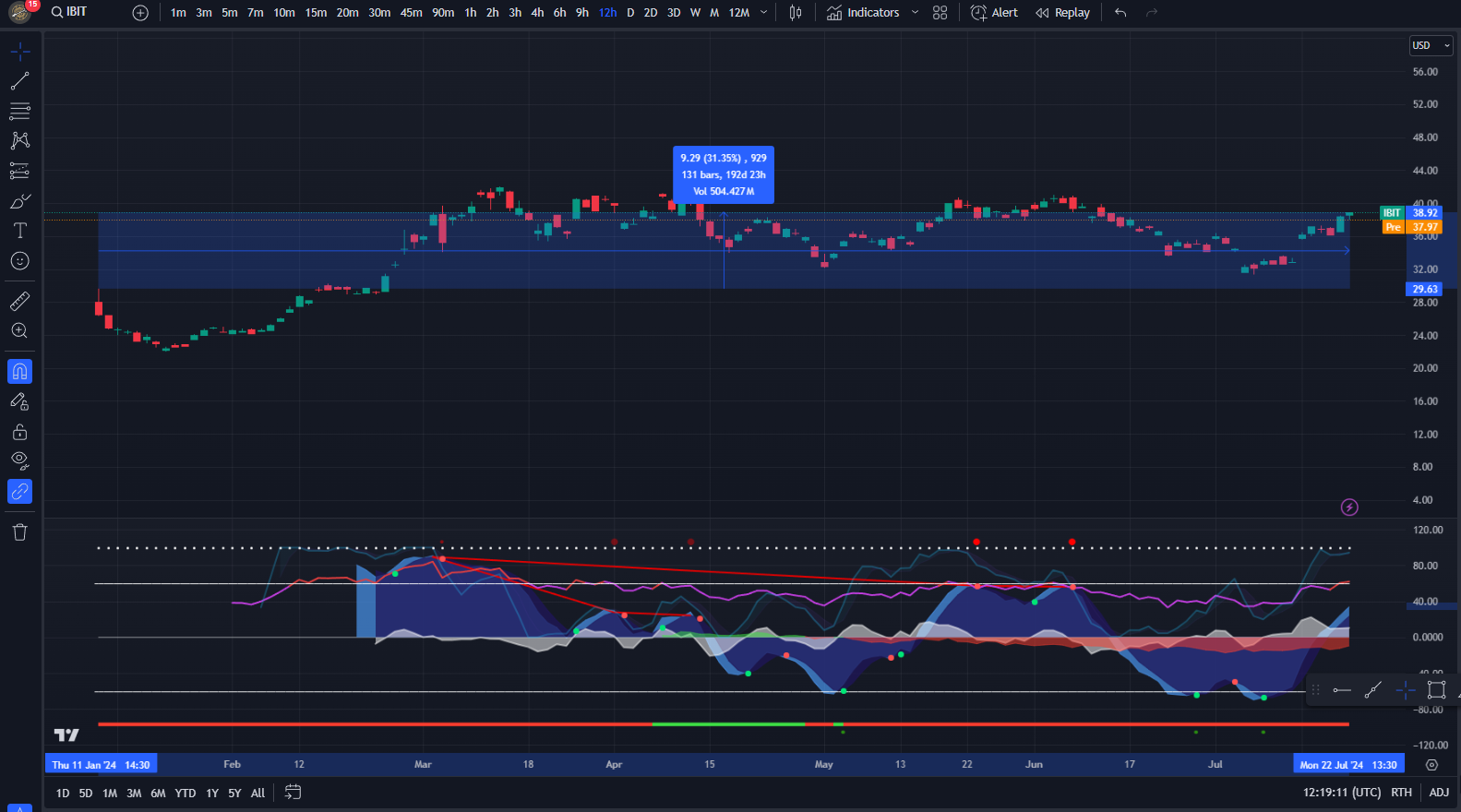
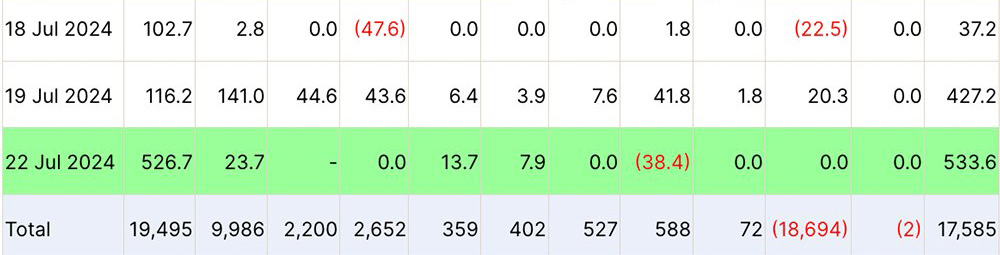
Since it’s inception at the start of January 2024 the iBIT ETF has gone up 31.35%. As of writing this July 22, 2024 the iShares Bitcoin ETF has seen an astounding $523 Million Inflows and a $912 Million trading volume over the last 24 hours.
In the span 6 months, listed Bitcoin ETFs have brought in over $14.7B in net inflows. Some of the reasons for this inflow might be due to the central bank liquidity policies.
BlackRock is buying up Bitcoin at a pace unlike any seen before from institutional investors.
This isn’t only bullish for the king of Crypto.
The 2nd biggest coin: Ethereum has been approved to receive it’s own NASDAQ listing. ETHA is the name of the fund set to track Ethereum’s native token, ether and it’s price performance.
It would appear that BlackRock’s clients are increasingly more interested in gaining exposure to digital assets through exchange-traded products (ETPs) which provide convenient access, liquidity and transparency. Getting into crypto has been made easier and safer for the boomers now.
Below is the official statement from BlackRock regarding it’s iShares Ethereum Trust ETF’s Launch:
New York - July 22, 2024 - The registration statement for BlackRock's iShares Ethereum ETF (ETHA) has been declared effective by the U.S. Securities and Exchange Commission (SEC). ETHA seeks to track the price of Ethereum's native token, ether and is expected to begin trading on Nasdaq on July 23, 2024. ETHA carries a 0.25 sponsor fee with a one-year waiver reducing the fee to 0.12% on the first $2.5B assets under management (AUM).
The iShares Ethereum Trust ETF (ETHA) offers exposure to the Ethereum's native token, ether, the second largest cryptocurrency by market capitalization. Ethereum, a global technology platform, is similar to an app store that generates value for ether as usage increases and more applications are built on top of it.
Over the last 12 months, iShares has launched 170 ETFs and ETPs including the iShares Bitcoin Trust (IBIT), driving innovation and providing investors with more choices to help them meet their investment goals.
With over 20 yeas of experience and more than 1,400 ETFs globally, iShares has helped millions of investors access different corners of the market. Every iShares product is underpinned by decades of investment expertise and institutional grade technology.
The Overall Crypto Market
“An emerging trend shows traditional financial institutions are increasingly looking to gain exposure to cryptocurrencies, signaling their potential future role in the crypto market. Currently, 37% of institutions invest in spot crypto, but this number is expected to decrease to 32% in the next 2-3 years. This decline is notable compared to last year’s data, where 52% of respondents anticipated investing in spot crypto.
The development of registered vehicles, such as Bitcoin ETPs (Exchange-Traded Products) in regions like the US, UK, Hong Kong, and Australia, seems to be influencing these future plans. Over a two-to-three-year period, 51% of institutional investors plan to invest in mutual funds and ETPs that target crypto-related companies, and 43% plan to invest in vehicles that hold underlying crypto assets. This trend suggests a preference for regulated products and familiar investment vehicles that offer better liquidity and secondary market activity.”
Previously a bearish sentiment was being brought up around the crypto market, but that all changed once the $60,000 range was reclaimed as of writing this. The only way to lose this is if we get a bigger than 4K drop down to $63,000 from the current price of $67,000. This seems quite unlikely at the moment with all of the positive news coming in regarding the institutional investors. There doesn’t seem to be a world in which the $69,000 resistance holds. This all points to a bullish run potentially bringing Bitcoin to a new All-Time High.
Now this all sounds great and all but what does the bearish case look like? If we happen to lose the 63K-64K support a potential drop from there down to 50K is more than possible. The S&P500 is nuking while BTC is holding it’s levels which seems good on paper but at the same time in the past the BTC price has been quite dependent on the US economy performing well.
Altcoins have a very positive outlook for the upcoming weeks aswell. As long as we hold above $63,000 there is no world in which altcoins aren’t pumping.
The future of finance is back. The biggest upside swing in this cycle is on the horizon. A potential 5x is not out of question. Even so the entire CT community has been feeling a bit lost.
In other words: If daily timeframe above $63,000 = good. If daily timeframe below $63,000 = bad.
Impact on the retail investor
Increased Interest in Digital Assets
Since the start of the year institutions have been having a much bigger impact on the market’s movements and it’s ease of access to the beginner retail investor. If you are looking to diversify your investment portfolio it has never been this popular to do so without any in-depth knowledge of crypto. But that’s not all there has also been a rise in Tokenized projects.
In July, BlackRock’s BUIDL fund surpassed $500 million, becoming the first-ever tokenized money market fund, accessible through Securitize. This milestone, despite limited investor access, signifies growing interest in tokenized financial products.
Franklin Templeton’s FOBXX fund, launched in April, reached $400 million, growing 16% in the past month, showcasing the rapid adoption of tokenized assets.
Citi’s February proof of concept tokenized a private equity fund by Wellington Management, and JPMorgan facilitated a collateral transaction using a decentralized application, highlighting the financial sector’s embrace of blockchain technology.
Visa and Mastercard are collaborating with major banks to test a Regulated Settlement Network, aiming to streamline settlement processes for tokenized assets, including commercial bank money and US Treasury securities.
In November 2023, UBS launched a tokenized investment fund on Ethereum under Project Guardian, with tokenized treasuries outpacing stablecoins in growth.
Securitize CEO Carlos Domingo hailed the ETF launch as a pivotal moment for tokenization, emphasizing the sector’s ongoing innovation and product development. This trend towards tokenization can democratize investment opportunities, offering retail investors new avenues for participation in traditionally exclusive financial markets.
This is all great but it has also had a negative impact on the more experienced retail investors and traders. There is less bitcoin on the market to be accessed by everyday people after BlackRock started buying up. They are trying to centralize crypto similar to their current financial ETF systems which goes completely against everything that crypto stood for previously. BlackRock can now borrow against their holdings. While many investors believe that they are bringing in money, behind the scenes they are destroying decentralization. Lack of regulatory clarity and a hard time of trusting newer exchanges in the ecosystem is still a potential barrier of entry and adoption of the crypto market for the retail investors. But all of this newfound regulations is going completely against what Bitcoin’s first principles are.
Thankfully nearly all institutions (94%) believe in the long-term value of crypto/digital assets and/or blockchain technology. In addition to believing solidly in the long-term viability of digital assets as an investment class, more than two-thirds of institutions are already invested in cryptocurrencies or other digital assets through funds or direct investments. Forty-two percent of institutions increased their allocations to digital assets in 2023, and now, with the advent of ETPs available for Bitcoin (BTC), 68% of institutions have or plan to invest in this registered vehicle. This existing and planned level of investment indicates steady growth of a willingness to invest in and a belief that digital assets are here to stay.
"Price is happy...
Bitcoin purists aren't..."
The Government's Involvement in Crypto
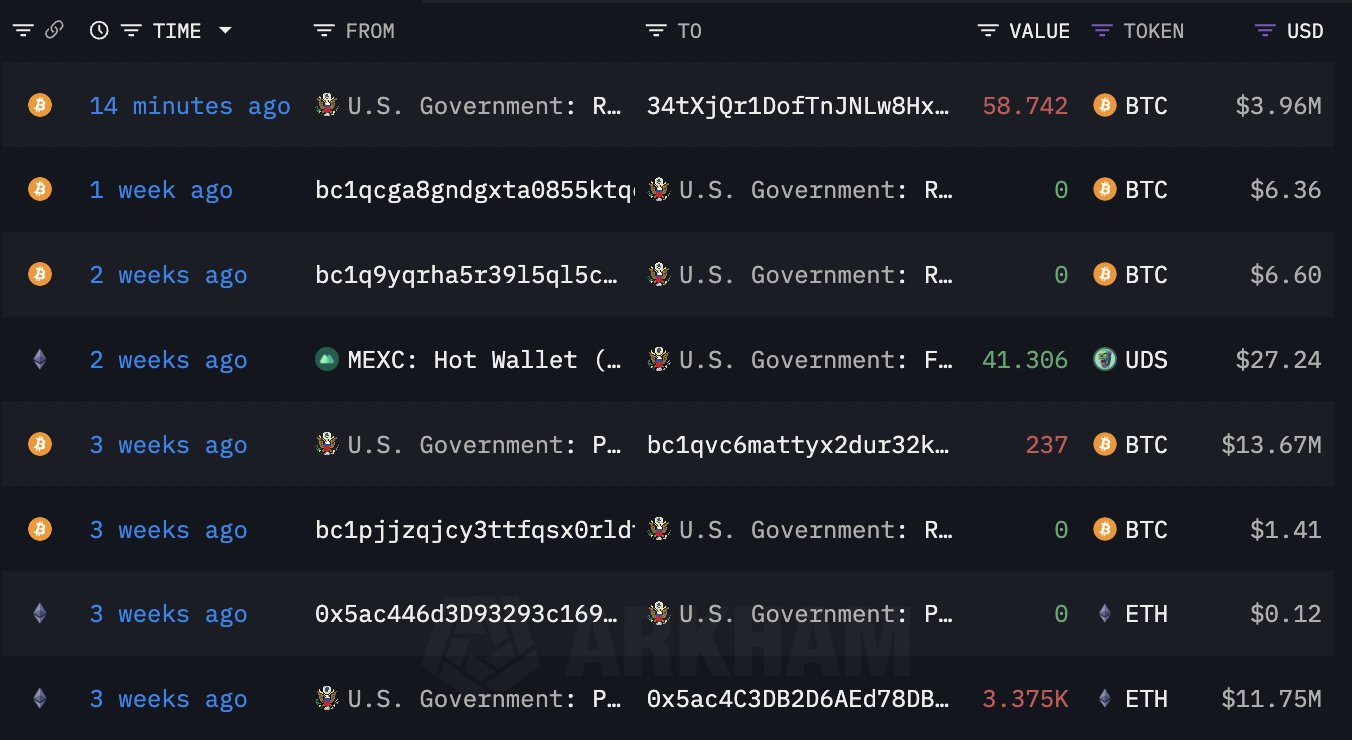
U.S. Government's Crypto address moving $3.96M worth of BTC.
The previous U.S. President Donald Trump has expressed his positive outlook on crypto and has even stated that the sees it as a possible reserve currency for the U.S. Government. Trump added that if he ends up taking the title of 47th President of the United States of America he will implement crypto positive laws and work on ways to integrate the technology into the US’s financial system.
The Justice Department holds around 200,000 Bitcoin as of writing this, which means that the United States is the largest country holder of Bitcoin in the world. They could move this to the Department of Treasury and start off with $13 billion worth of bitcoin on their balance sheets. But as it currently stands the U.S. Department of Justice is a completely random seller on the market right now, pushing the price down at times. If they change their strategy and move into a more long-term holding plan this could have significant positive impact on Bitcoin’s price.
Of course for this to happen more regulation will need to be put into place, once that happens the US government has a very high chance of adopting Crypto into their operations. Earlier in june Coinbase, a big crypto exchange donated $25 million to a group that fights for crypto-friendly policies in the US. This is a clear sign that the crypto industry is getting more serious about politics.
Will other crypto ETFs show up
Talks about a potential Ripple ($XRP) ETF
The approval of BlackRock’s iShares Bitcoin Trust (IBIT) has paved the way for a surge in interest and potential developments in cryptocurrency Exchange-Traded Funds (ETFs). This approval is significant as it signals regulatory acceptance and provides a regulated avenue for institutional and retail investors to gain exposure to Bitcoin. Given BlackRock’s stature in the financial world, its entry into the crypto ETF space is likely to inspire other asset managers to follow suit.
Market Response and Potential Competitors
Following BlackRock’s move, several other financial giants, including Fidelity, VanEck, and WisdomTree, have either filed for or are considering filing for their own Bitcoin ETFs. The success of IBIT could accelerate the approval process for these applications, as regulatory bodies might feel more confident about the security and stability measures implemented by these ETFs.
The introduction of more Bitcoin ETFs could have several implications:
Increased Legitimacy: ETFs are traditionally seen as secure and regulated investment vehicles. Their rise in the crypto space could enhance the legitimacy and acceptance of cryptocurrencies.
Broader Market Access: ETFs can attract a wider range of investors, including those who are hesitant to directly purchase and store cryptocurrencies.
Market Growth: With increased accessibility and legitimacy, the overall market capitalization of cryptocurrencies could see significant growth.
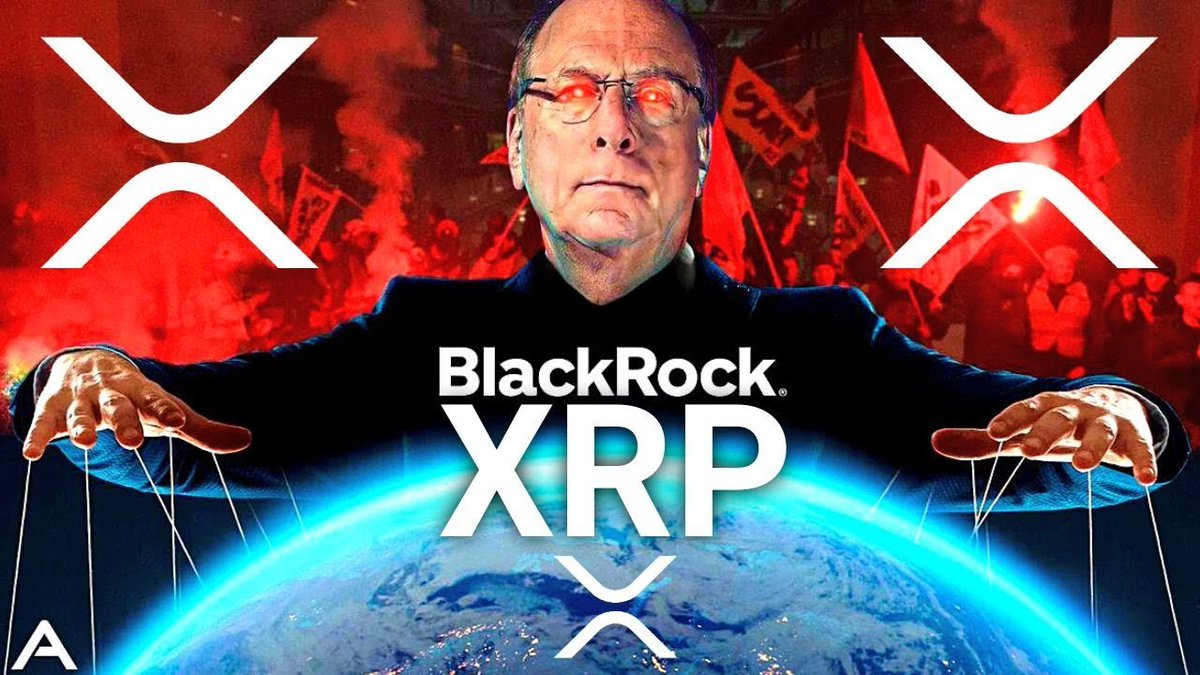
Rumors are circulating about the possibility of BlackRock launching an ETF focused on Ripple’s XRP. While the company has not made any official announcements, the speculative discussions indicate a growing interest in diversifying crypto investment products beyond Bitcoin.
Why Ripple?
Ripple’s XRP has been a subject of both excitement and controversy. Its fast transaction speeds and low costs make it attractive for cross-border payments, which aligns with BlackRock’s focus on innovation and efficient financial solutions. However, Ripple has also faced legal challenges, most notably from the U.S. Securities and Exchange Commission (SEC), which could influence the timing and feasibility of such an ETF.
Potential Benefits of an XRP ETF
Diversification: An XRP-focused ETF would offer investors a new avenue for diversification within the crypto market.
Market Expansion: The introduction of an XRP ETF could increase liquidity and stability for the token, potentially attracting more institutional investors.
Regulatory Clarity: The success of such an ETF would hinge on the resolution of Ripple’s legal issues with the SEC. Positive outcomes could pave the way for more altcoin ETFs.
The Rise of Meme Coins
Meme coins, such as Dogecoin (DOGE) and Shiba Inu (SHIB), have captured the public’s imagination and become significant players in the cryptocurrency market. These coins often start as jokes or internet memes but can achieve substantial market capitalizations due to their viral appeal and community support.
Drivers of the Meme Coin Phenomenon
Social Media Influence: Platforms like Twitter and Reddit have been instrumental in driving the popularity of meme coins. High-profile endorsements from celebrities and influencers, such as Elon Musk’s tweets about Dogecoin, can lead to significant price surges.
Community Engagement: Meme coins often have highly engaged and active communities that promote and support the coin, creating a sense of belonging and shared purpose among investors.
Accessibility and Low Entry Barriers: Meme coins usually have low prices per coin, making them accessible to new and smaller investors who want to participate in the crypto market without substantial financial commitments.
What's the End-Game for Blackrock?
BlackRock’s entry into the cryptocurrency market, particularly with the launch of its iShares Bitcoin Trust (iBit), is a strategic move that signals it has a newfound interest in a long-term vision for digital currency assets. Larry Fink isn’t merely dipping his toes into the crypto waters; he’s dive bombing into a major position as the King of future financial innovation. The end-game for BlackRock seems to be establishing itself as a leader in regulated cryptocurrency investment products, thereby attracting both institutional and retail investors who seek a secure and compliant way to gain exposure to digital currencies.
Now is his newfound interest genuine? Who really cares about that? At the end of the day we are traders/investors are here to make a profit and so is Larry. If you are here for the technology and it’s initial decentralized blockchain technology then I have some bad news.
That time is over.
BlackRock has entered into the crypto market with both their Bitcoin and Ethereum ETFs and that means that only more regulation and limitations will be imposed on the crypto market. The unregulated wild-west of crypto is over. The new Meme Dream is here to stay. Most investors seem to be ok with this. With the amount of crypto scams and fake projects it was high time someone came in to bring some form of law to this land. Will Larry Fink be able to hold on to that crown for long is another question.
Can Outflows Destroy iBit?
While outflows can impact the performance and stability of any ETF, including BlackRock’s iBit, it is unlikely it would “destroy” it. Here’s a few reasons why:
Diversified Investment Base: BlackRock’s extensive and diverse client base provides a steady flow of investments, mitigating the impact of significant outflows. In other words there are more than enough boomers to eat up the cost of the drop.
Market Influence: As a major player, BlackRock’s movements and decisions often influence market trends. This means that they can pay the media to prop up any agenda or trend they want for the markets.
Regulatory Safeguards: The structure of iBit is aligned with regulatory standards and it ensures that there are mechanisms in place to manage and counteract large-scale outflows. But then that removes the entire reason of crypto in the first place.
However, persistent and substantial outflows could lead to reduced liquidity and impact the fund’s overall performance, potentially leading to a loss of investor confidence. Or if Bitcoin decides to go back down to $15,000 like it did the last Crypto Winter. Then nothing can save Larry Fink.
Overall I’d say the current situation is bullish for the Price of $Bitcoin and $Ethereum but I’d be cautious when it comes to the future of the crypto market with so much regulation.
What's the future of Blackrock's digital currency ETFs and Final Thoughts
In conclusion this is good for the crypto market’s overall growth. More eyes on crypto means more interest which means more regulation which means more beginner friendly entry into the space.
The GreyScale ETF from Saylor is no longer the biggest player on the market and he has lost his monopoly.
The BlackRock Ethereum ETF has already done over $361,000,000 in volume. The Bitcoin ETF is slowly climbing up with each day and has a really positive Technical Outlook based on our analysis over at TradingView.
Just like how tech investors might purchase a basket of FAANG stocks, we think many investors will soon seek new types of crypto exposure beyond Bitcoin ETFs, and the launch of the Ethereum ETF is the spark to ignite that.
Our Bags will be pumping, the Bitcoin and Ethereum ETFs will be building up authority for the crypto space and more big players will show interest.
This means that the good old days of the wild and lawless crypto world are over. Crypto started as a decentralized way to move away from traditional finance. Now, with Wall Street giants stepping in, are we losing that rebellious spirit? It’s like seeing your favorite indie band go mainstream. The original ideals of decentralization are slowly burning out.
We love the idea of making bank, but do we really want to trade our ideals for it? It’s a balancing act. Can we have both the profits and the punk rock ethos of crypto?
Expect more ETFs and big players diving into crypto. It’s gonna get crowded. The key will be to stay informed, stay adaptable, and maybe even keep a foot in the decentralized world while riding the regulated wave. Final Thoughts
BlackRock’s ETF is a significant milestone for the crypto space. It opens a new chapter in the crypto community, one where traditional finance and digital currency intersect more than ever before. This development is exciting but also brings mixed feelings about the future direction of crypto. Balancing the benefits of mainstream adoption with the principles of decentralization will be left to us the everyday people, the retail investors and the original Blockchain nerds that had an interest in future.